
Transfer Assistance for Elderly
Quick Answer
Transfer assistance puts a trained caregiver beside your mom or dad when they need a hand getting out of bed, off the toilet, or into the car. Help is scheduled around the hardest times of day, from a few hours a week up to 24/7. Call D&C Home Care to discuss a care plan for your loved one.
Safe Transfer Assistance for Your Parent’s Everyday Routine
Transfer assistance for elderly adults helps your mom or dad move safely from one spot to another, like bed to wheelchair, couch to standing, or getting out of the car. Maybe your dad now needs two or three tries to stand, or your mom reaches for the towel bar to steady herself. In Maine, winter can make movement harder, since a trip to the store can also mean stepping onto an icy driveway.
You do not have to handle daily movements yourself. A trained caregiver knows how to guide your mom’s safe transfer, where to guide your dad to stand, and when to slow down. Your parent’s routine stays their own, minus the risky shortcuts. D&C Home Care provides transfer help as part of our Personal Support service. We schedule steady support around the times of day your loved one needs it most.
Tell Us Where Your Mom or Dad Needs a Steady Hand
Is getting out of bed, off the toilet, or into the car getting harder? A short call helps us understand where transfer support fits. There is no pressure to decide right away.
What Does a Caregiver Actually Do During a Transfer?
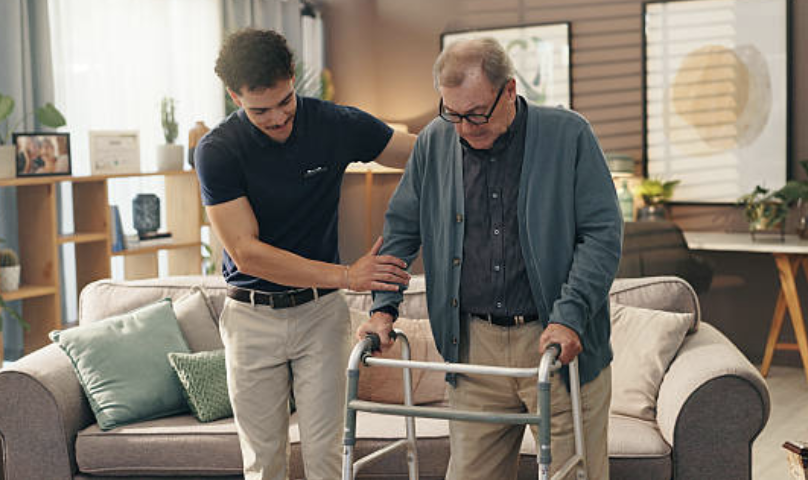
A trained caregiver provides the physical assistance your parent needs when they move around the house or run errands. Daily transfer assistance can cover explaining the movement, staying close, or offering hands-on support. Assistance follows a care plan that details the level of help based on your parent’s balance, strength, understanding, and how much of their own weight they can still support.
Care plans can mix all levels of support, depending on your parent’s strength and capability. Standby help means the caregiver stays close, ready to steady your loved one if they struggle. Hands-on guidance is a light touch at your mom’s elbow or back to keep her balance on track. Full assistance means the caregiver supports more of your dad’s effort when he can't stand or move safely alone.
Caregivers work with your parent’s existing equipment at home, like a walker, wheelchair, grab bars, or shower bench. Transfer help is non-medical and in-home caregivers don't provide therapy or recommend new equipment. If your loved one might need something new, their doctor or physical therapist is the right person to recommend it.
Steadier Support and Less Strain for Your Loved One
Caregiver assistance makes a difficult transfer feel more controlled for your parent. With a caregiver beside them, daily movement takes less effort and carries fewer risky moments at home or in the car. It also lowers the risk of a fall that can mean an ER trip. Caregivers also help check your dad’s footing before he stands, keep his path clear, and help him pause when he feels tired.
Your parent can also take part in familiar routines. Your mom chooses a seat at the table or gets ready in time for bed. A caregiver helps with the difficult movement while allowing your mom to take charge of the routines she can manage. Caregivers can also help her adjust movement throughout the day, since she may have more energy at noon than at bedtime.
An agreed care plan makes each day easier for you, too. Lifting a parent without training is a common way for family members to hurt a back or shoulder. When a caregiver handles the hardest movement, your parent can keep their routines at home, and your visits can go back to coffee and conversation.
Ready to Hand Off the Heavy Lifting?
Let’s discuss trained assistance so you are not left guessing how to move your parent.
When Do Everyday Changes Call for Transfer Support?
Changes in how your parent stands, sits, or moves around can mean it's time to review transfer support. D&C Home Care provides transfer assistance that matches your parent's needs and routines.
Standing Up Takes More Time or Effort
Your mom rocks back and forth to get out of her chair, or your dad leans on the counter to stand. Standing up may become harder as your parents age. A caregiver can step in when their strength runs lowest, often first thing in the morning and late in the evening.
A Hospital Stay Brings New Limits
The first weeks home after your dad’s discharge can mean new rules about bending or putting weight on one leg. Caregivers follow your parent’s discharge instructions and the physical therapist’s guidance, so each guided move matches what his care team recommends.
Dementia Makes Simple Moves Confusing
For parents living with dementia, moving from the bed to a chair can feel confusing. Caregivers use gentle, familiar cues, and go one step at a time. If your dad isn’t ready, they wait a few minutes and offer the move again in a different way.
Appointments Mean More Car Rides
One doctor visit can mean four transfers, from the house to car, car to clinic, and back again. A caregiver helps your loved one safely get in and out of the car, which matters most during Maine winters when driveways and parking lots turn icy. If your parent also needs a ride, our Transportation service can cover the trip.
You Can’t Be There Every Day
Living far away or managing work can make daily visits difficult. Scheduled support can cover the hardest transfers at agreed times. Our Virtual Care Companion service, built on Sensi, adds a 24/7 virtual safety net between visits.
Noticing one of these changes doesn’t mean your parent has to give up their routine. It may simply be a good time to talk about in-home care.

Help With Bed, Chair, Bathroom, and Car Transfers
Our caregivers help with the daily transfers at home, including moves that use your loved one’s own mobility equipment. Most care plans include a few guided transfers, and the mix can be adjusted over time.
Bed to Wheelchair or Chair
Getting out of bed starts the day, so it's often the first transfer on a care plan. The caregiver helps your loved one sit up, pause at the edge of the bed to let any dizziness pass, then help them get to a chair or wheelchair while the brakes are locked.
Sit-to-Stand Assistance
Sit-to-stand assistance helps your loved one get up from a couch, dining chair, or recliner. Caregivers guide them to scoot forward, plant their feet, and lean forward before pushing up. This guided assistance turns several shaky tries into one smooth, safe stand.
Toilet and Shower Transfers
Bathrooms are tight, hard, and often wet, making them the trickiest rooms for daily transfers. Caregivers help your loved one on and off the toilet and onto a tub or shower bench, using the grab bars or equipment already in place. For more help in this daily routine, see our Toileting support.
Getting In and Out of the Car
Vehicle transfers mean low seats, hard door frames, and uneven ground. The route and standing surface need a closer look before your mom attempts any movement. The caregiver helps your loved one sit first and then swing their legs in, reversing the steps on the way out.
Transfers With Mobility Equipment
Caregivers work with your loved one’s suitable existing equipment, including a walker, cane, wheelchair, or transfer board. A transfer board bridges two seats so your dad can slide across instead of standing up.
What Shapes the Cost of Transfer Help at Home?
Transfer support costs depend on the care hours and assistance your parent needs. Talking through their routine helps us arrange a suitable schedule and quote.
- Visit Length and Frequency: In-home care is billed by the hour. Bathroom, bedtime, and vehicle transfers may need different time arrangements.
- Level of Support Needed: Spoken guidance and hands-on help mean different care needs.
- Visit Timing: Early-morning, late-evening, and weekend transfers may be priced differently.
- Equipment and Available Space: The existing setup affects whether the requested assistance is suitable.
- Other Daily Tasks: Personal care services like dressing, bathing, or meal support require more time and support within the visit.
We'll walk you through hours, visit minimums, and any separate charges in a clear estimate built on your parent's care plan.
Experienced Care Behind Your Parent’s Transfer Plan
Every transfer plan we build draws on more than two decades of leadership in Maine senior care. D&C Home Care opened in 2022 under co-owner Abbey Davies, who has led in-home senior care teams in Maine since 2005. That experience shapes how we train caregivers and plan each client’s care.
In Maine, our caregivers are professionally trained and certified as Personal Support Specialists (PSS). PSS is a Maine certification that requires state-approved training in personal care, including safe ways to help adults move. Each caregiver is also trained to your parent's specific care needs, so they know how to protect your loved one and themselves during every transfer.
Your parent’s plan also stays visible to you and your family. Caregivers log notes in our family portal, so you can see how each day’s transfer went and whether anything seemed harder than usual. When you call the office, a live person answers, and our weekend on-call coverage means someone is there when you have questions.
Families Share What Steady Support Means
⭐⭐⭐⭐⭐
"We had many different Home Health Care companies help us, but D&C was the most reliable and well trained of all of them. You can tell when a paid caregiver really cares about a client, and that is one of the many hallmarks of D&C. I cannot recommend them highly enough."
Anne W., Google Review
⭐⭐⭐⭐⭐
"My wife and I have only used D&C’s services for three weeks. I am currently confined to a wheelchair waiting for a knee replacement in two weeks. D&C caregivers have rendered consistent, caring, reliable, and safe services, especially in the task of transferring me from bed to wheelchair, desk chair or lounge chair. The are knowledgeable, reliable, and caring."
Michael S., Google Review
Let's Talk About Your Loved One’s Daily Routine
In-Home Transfer Assistance Across Maine and Beyond
Our care team provides in-home transfer help across Maine, including Greater Portland and York County. We also serve families in the Midcoast, Augusta/Waterville, and Greater Bangor.
Beyond Maine, our team also serves the New Hampshire Seacoast, including Portsmouth, Dover, and Exeter. Tell us where your parent lives so we can arrange local staffing and confirm whether the requested transfer assistance is available.
Transfer Assistance for Elderly FAQs
How much does in-home transfer assistance cost?
In-home transfer help is billed by the hour as part of non-medical care. Maine's 2025 median for a non-medical caregiver was about $44 an hour, according to the CareScout Cost of Care Survey. Each estimate depends on how many hours of care are scheduled each week and when visits happen.
Can a caregiver come just for mornings and bedtime?
Yes, many families start with short visits at the hardest times of day, like getting up in the morning and getting ready for bed. Care plans range from a few hours a week up to 24/7 home care. You can add time as your loved one's needs change.
Does long term care insurance pay for transfer help?
It may, depending on your parent’s insurance policy. Transferring is one of the six activities of daily living (ADLs), the everyday tasks most long term care policies use to decide when benefits begin. Our Aging Life Care Services can help you review your parent’s policy and understand how to file a claim.
How quickly can transfer support start?
Transfer support can begin once the care plan is arranged and a caregiver's schedule is confirmed. Tell us about any discharge date, an upcoming change in family availability, movement restrictions and equipment needs. We can explain what needs to be reviewed before care begins and arrange a realistic schedule.
Should we buy transfer equipment before arranging care?
No, tell us what your parent already uses and share instructions from their healthcare team. Most families start with the walker, wheelchair, or grab bars they have. Our caregivers work with suitable equipment already in the home. Your parent’s doctor or physical therapist should recommend anything new or different.
Plan Steady Support for Your Parent’s Daily Routine
Tell us which transfers need help, what equipment is already at home, and when support would matter most. Our care team can discuss service suitability and arrange scheduling according to your parent’s care plan.
Contact our team about transfer assistance. We will build a plan that supports your parent’s abilities, preferences, and daily routine.